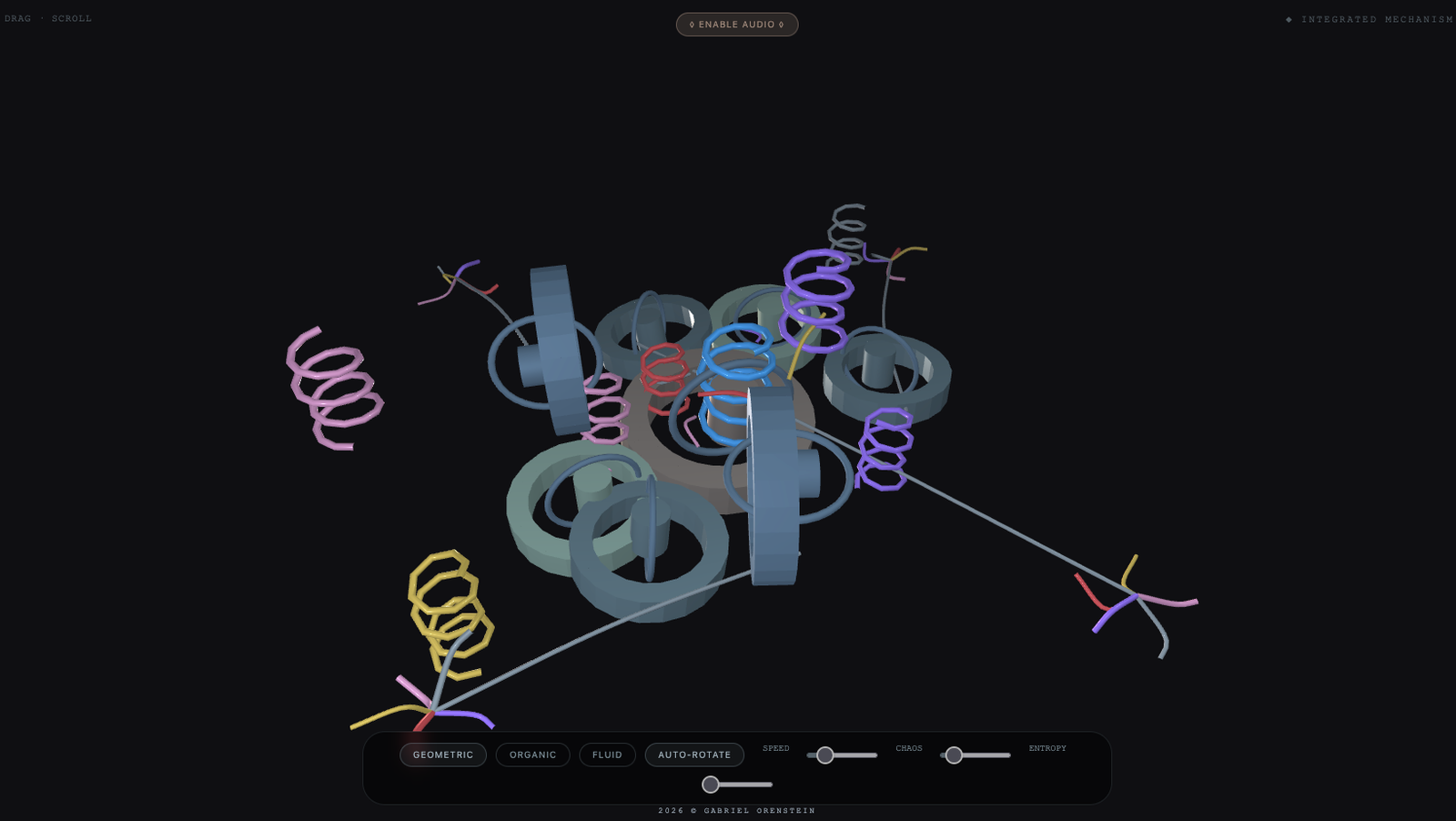
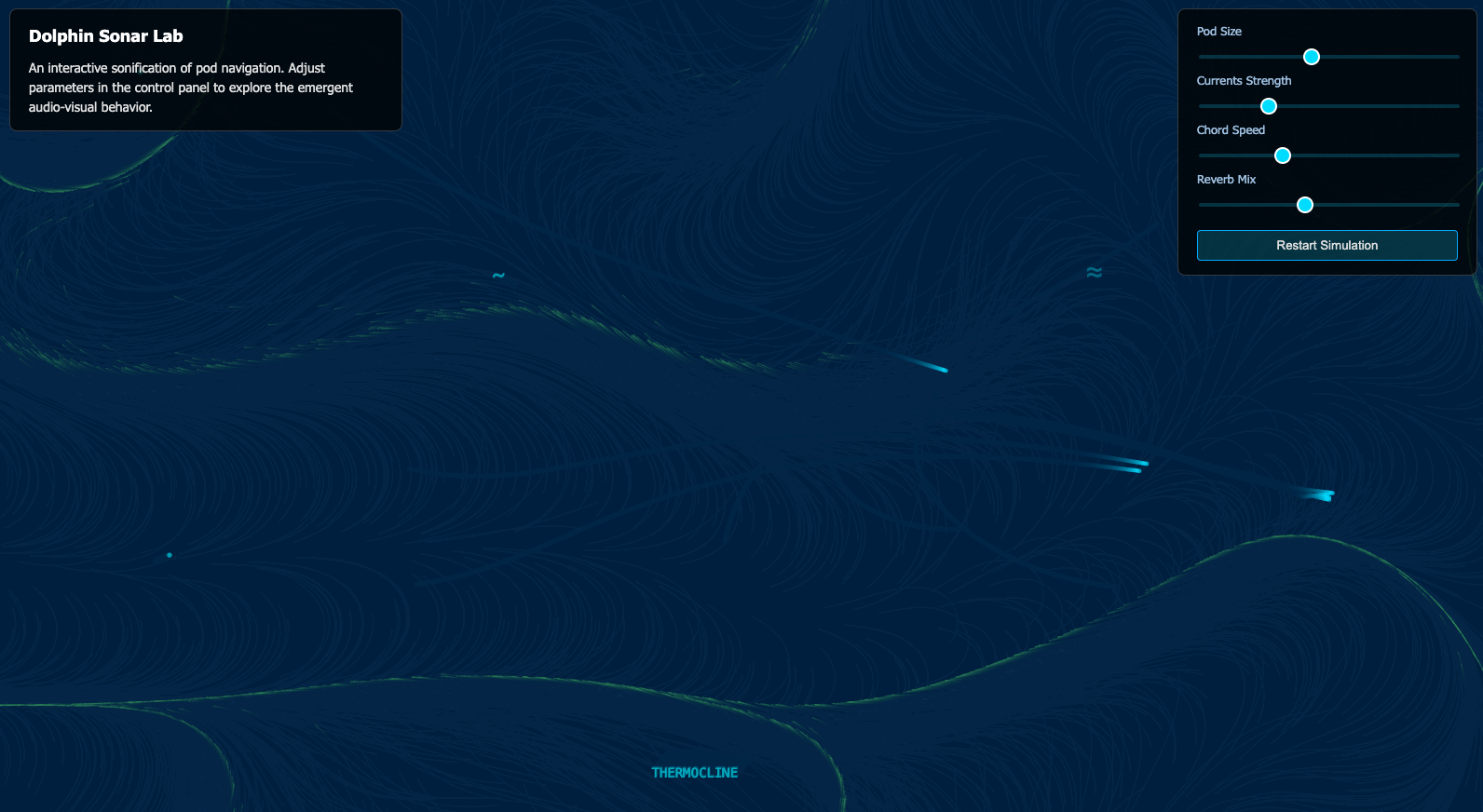
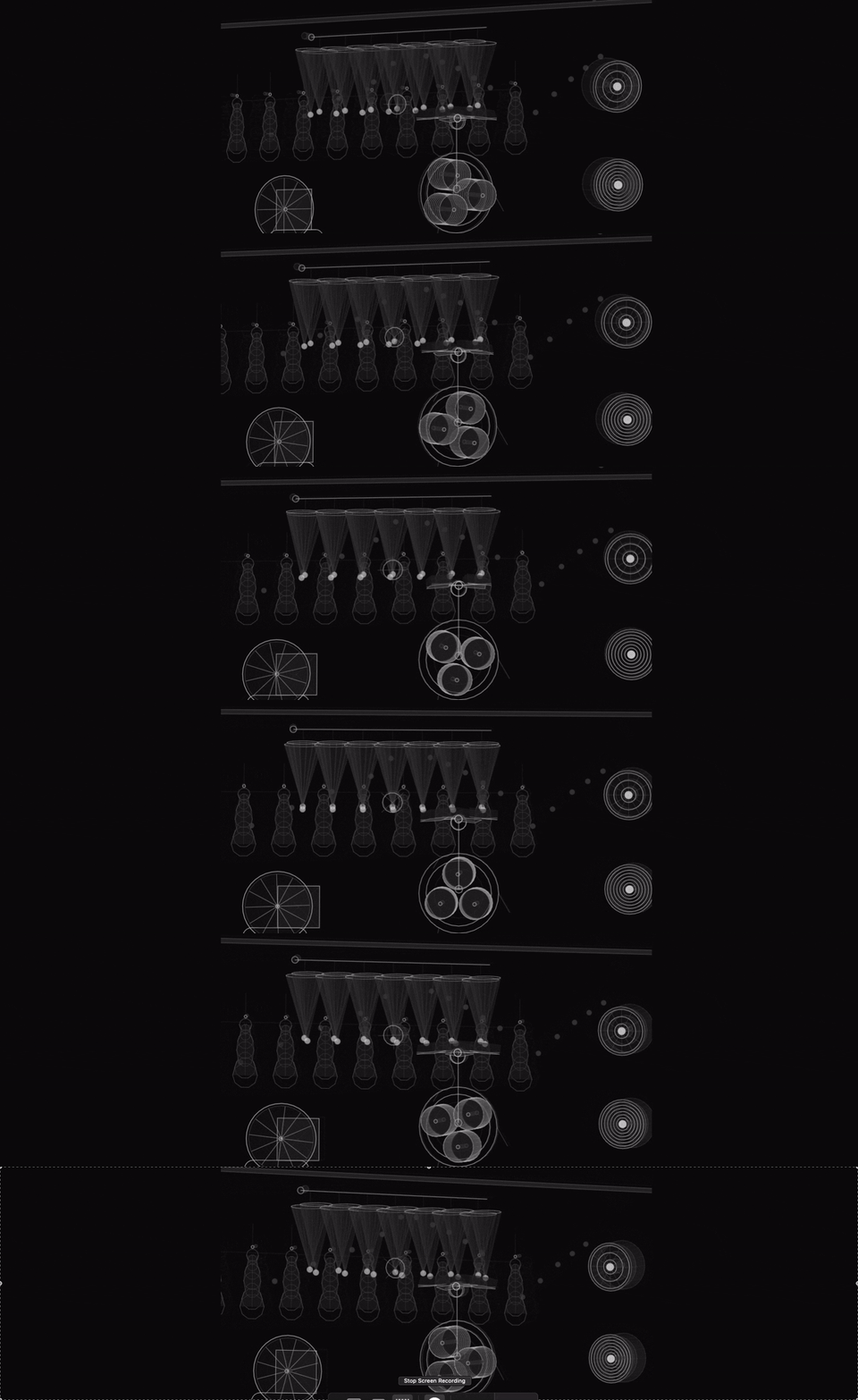
Perception through vibration. Space becomes a field of call and response—agents navigate invisible currents, their pulses coalescing into emergent harmonies. What appears as choreography is computation: simple rules generating behavior.
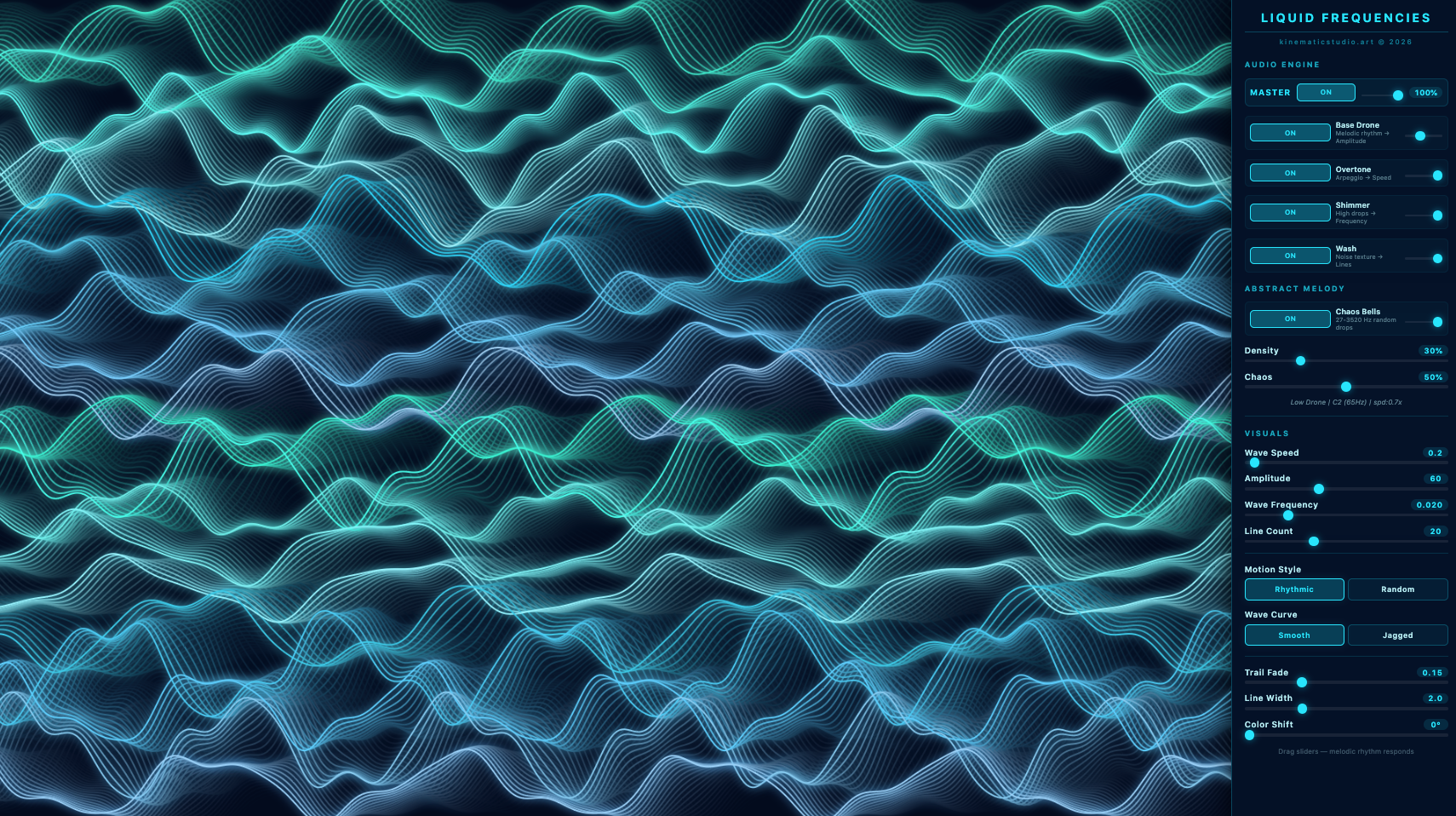
You modulate the system (population, flow, decay) and witness transformation cascade. Sound maps position; listening becomes active construction—building shared reality through vibration.
The screen is a vibrating field where emergence is both method and meaning. You conduct a conversation with a system that perceives differently than you do.
In Progress
ARTIST 1
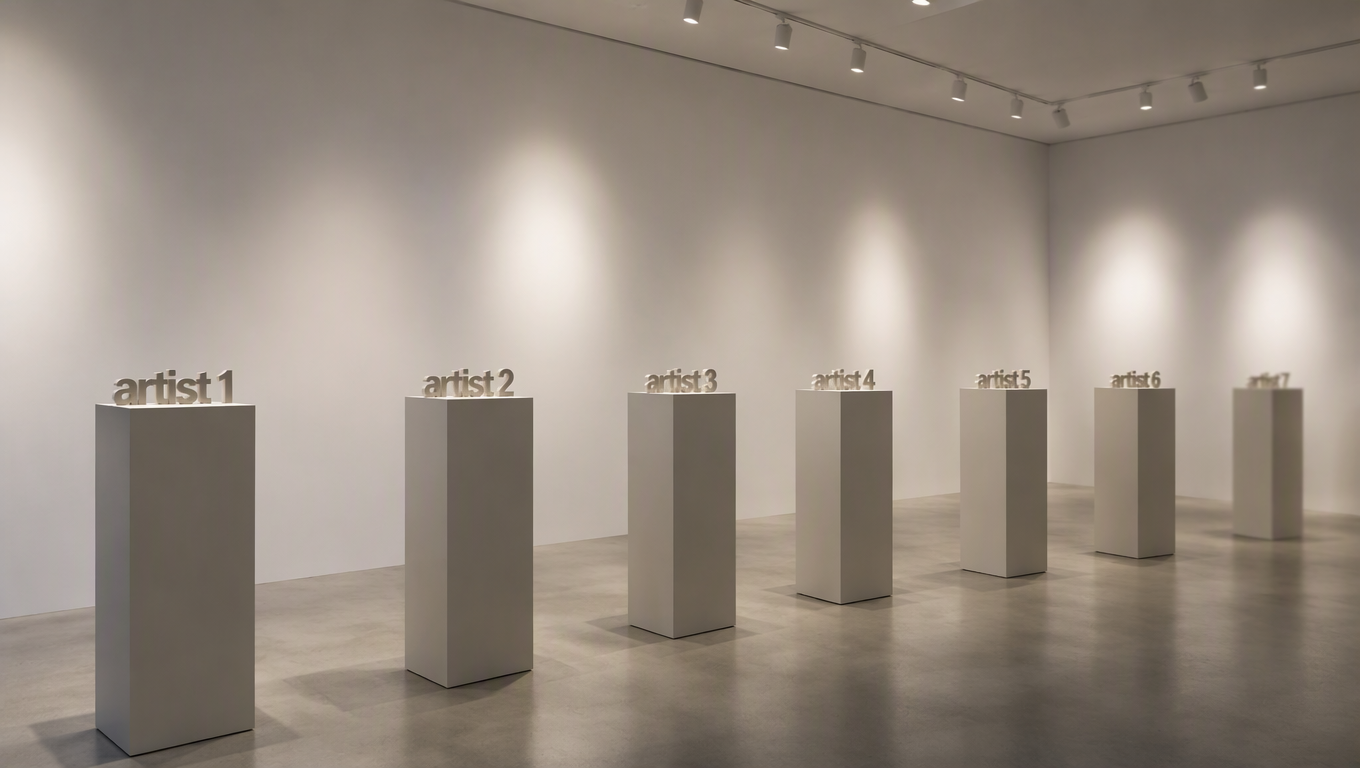
Explores the field of emptiness as presence, absence as declaration. Their work interrogates the void between intention and execution, asking: what if the nothing is the something? The pedestal becomes a monument to unfulfilled potential—radical, brave, and deeply unnecessary.
ARTIST 2
Investigates the absence of color and shape as the most complex gesture available to contemporary practice. By refusing to manifest visually, they challenge the hegemony of the retinal. Their non-existent palette speaks to privilege, silence, and the erasure of craft itself. A masterwork in unmaking.
ARTIST 3
Presents an ongoing durational performance titled "Standing Near Art." The work questions the boundary between witness and participant, body and plinth. They have not moved since Tuesday. This is commitment. This is endurance. This is possibly a medical emergency, but primarily conceptual.
ARTIST 4
Excavates the liminal space between "could have" and "didn't bother." Their practice centers on the democratization of intention—why realize when you can theorize? The Art of Nothing, to them, is not a theme but a wound. They have read one paragraph of Deleuze and will reference it incorrectly for decades.
ARTIST 5
Works exclusively in the medium of borrowed significance. Their contribution recontextualizes the gallery's HVAC system as commentary on climate, circulation, and the invisible labor of temperature. The work is everywhere and nowhere. Mostly it is in the vents.
ARTIST 6
Offers a radical proposition: what if the pedestal is the art, and the artist merely its temporary custodian? Their intervention subverts hierarchies of display, authorship, and verticality. They did not build the pedestal. They found it. This is called "sourcing."
ARTIST 7
Completes the cycle with "After Nothing," a posthumous retrospective of work not yet conceived. By anticipating their own irrelevance, they achieve timelessness. The empty space above their pedestal represents the future of art—unburdened by object, skill, or evidence. Critics are calling it "definitely something."
Curated by Someone

HTML Website Maker